


Dubai Air Taxi Best Flying Taxi Service & Latest Updates
Dubai has built a reputation for turning futuristic ideas into reality. From the world’s tallest building to driverless metro trains, the city has consistently embraced innovation. Now, another ambitious project is preparing to take off quite literally.
- What Is the Dubai Air Taxi?
- When Will Dubai Air Taxis Launch?
- How Will the Aircraft Work?
- Which Routes Will Be Available Initially?
- How Much Time Will Dubai Air Taxis Save?
- Where Will Air Taxi Stations Be Located?
- How Will Passengers Book an Air Taxi?
- Why Is Dubai Investing in Flying Taxis?
- Will Air Taxis Replace Cars?
- Are Air Taxis Safe?
- A Glimpse Into the Future of Urban Mobility
The Dubai Air Taxi project promises to redefine urban mobility, offering residents and visitors a new way to travel above traffic in electric aircraft. Designed to be fast, sustainable and efficient, the service could make flying across the city as simple as booking a ride through an app.
Here’s everything you need to know about Dubai’s upcoming air taxi service.
What Is the Dubai Air Taxi?
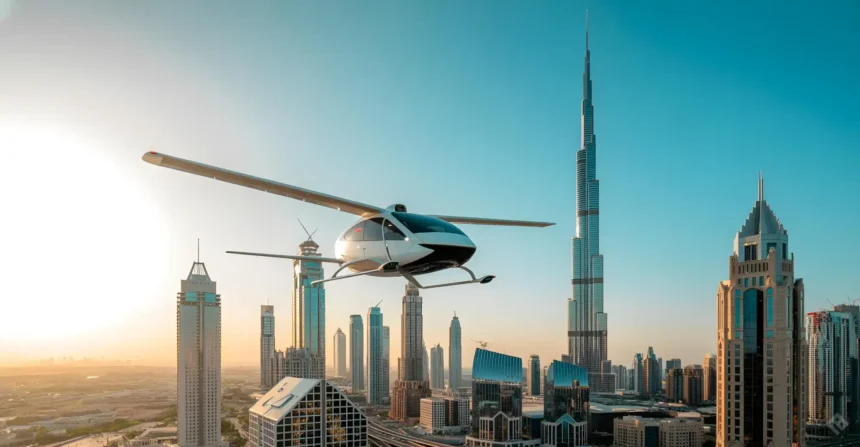
Dubai Air Taxi is an advanced urban transportation system that uses electric vertical take-off and landing aircraft, commonly known as eVTOLs. Unlike traditional helicopters, these aircraft are quieter, emission-free and specifically designed for short-distance city travel.
The Dubai Air Taxi service is being developed through a partnership between Dubai’s Roads and Transport Authority (RTA), Joby Aviation and Skyports Infrastructure. Joby has been granted exclusive rights to operate air taxis in Dubai for six years.
When Will Dubai Air Taxis Launch?
Commercial operations are expected to begin during 2026, following several successful test flights and the construction of dedicated vertiports. Joby Aviation has indicated that it aims to carry its first passengers in Dubai during 2026.
Dubai aims to become the first city in the world to offer a large-scale commercial flying taxi network.
How Will the Aircraft Work?
The electric Dubai Air Taxi resemble a cross between a helicopter and a small airplane.
Each aircraft will:
- Carry one pilot and four passengers.
- Reach speeds of up to 320 km/h.
- Travel distances of approximately 160 kilometers.
- Operate with zero operational emissions.
- Produce significantly less noise than helicopters.
The aircraft are fully electric, supporting Dubai’s sustainability and smart mobility goals.
Which Routes Will Be Available Initially?
The first phase of the Dubai air taxi network will connect four major locations:
Dubai International Airport
Travelers arriving at DXB will be able to continue their journey by air taxi.
Palm Jumeirah
One of Dubai’s most popular residential and tourism destinations.
Dubai Marina
A major business and residential hub.
Downtown Dubai
Home to Burj Khalifa, Dubai Mall and numerous commercial districts.
Additional vertiports are expected to be introduced in the future as the network expands.
How Much Time Will Dubai Air Taxis Save?
One of the biggest advantages of the service is speed.
A journey from Dubai International Airport to Palm Jumeirah, which currently takes around 45 minutes by road during busy periods, is expected to take approximately 10 to 12 minutes by air taxi.
For commuters and visitors, this could dramatically reduce travel times across the city.
Where Will Air Taxi Stations Be Located?
Air taxis will operate from dedicated stations known as vertiports.
These facilities will include:
- Passenger lounges.
- Security screening areas.
- Charging infrastructure.
- Boarding zones.
- Connections to other transportation systems.
Construction has already begun on several vertiports, with the first facilities expected to be ready ahead of commercial operations.
How Will Passengers Book an Air Taxi?
Passengers are expected to book flights digitally, much like ride-hailing services.
Uber and Joby Aviation have already unveiled plans for “Uber Air powered by Joby,” allowing customers to reserve air taxi rides directly through the Uber app.
This integration aims to create seamless journeys that combine road transport with aerial mobility.
Why Is Dubai Investing in Flying Taxis?
Dubai’s leadership has long focused on becoming one of the world’s smartest cities.
The air taxi initiative supports several objectives:
- Reducing road congestion.
- Promoting sustainable transportation.
- Strengthening Dubai’s global innovation leadership.
- Improving connectivity between major destinations.
- Enhancing the visitor experience.
The project also aligns with Dubai’s broader smart mobility and environmental goals.
Will Air Taxis Replace Cars?
Not entirely.
Flying taxis are designed to complement existing transportation systems rather than replace them. Metro stations, taxis, buses and e-scooters will continue to form the backbone of urban mobility.
Air taxis are expected to serve premium, high-demand routes where time savings matter most. Over time, costs may become more affordable and access more widespread.
Are Air Taxis Safe?
Safety remains one of the most important priorities for the industry.
Joby Aviation has spent years conducting extensive testing and certification programs. The aircraft have already accumulated tens of thousands of test-flight miles and are being developed in close coordination with aviation regulators.
Dubai authorities are also working with international partners to ensure operations meet the highest standards.
A Glimpse Into the Future of Urban Mobility
Flying taxis once belonged to science fiction, but Dubai is turning that vision into reality. With electric aircraft, dedicated skyports and app-based booking systems, the city is preparing for a transportation revolution that could redefine daily commuting.
As commercial operations approach in 2026, Dubai is once again positioning itself at the forefront of innovation. For residents and visitors alike, the possibility of soaring above traffic and reaching destinations within minutes may soon become an everyday experience.
Do follow us on Instagram
Read More – How to Cancel a UAE Visa Without Costly Mistakes