



Etihad Rail UAE Rail Network, Best Routes & Latest Updates
For years, residents and visitors across the UAE have imagined a future where travelling between emirates is faster, easier, and far less stressful. That future is finally arriving.
- 1. Mohammed Bin Zayed City, Abu Dhabi
- 2. Al Hilal, Fujairah
- 3. Jumeirah Golf Estates, Dubai
- 4. Al Dhaid, Sharjah
- 5. University City, Sharjah
- 6. Al Faya, Abu Dhabi
- 7. Al Mirfa, Abu Dhabi
- 8. Madinat Zayed, Abu Dhabi
- 9. Mezairaa, Abu Dhabi
- 10. Al Dhannah, Abu Dhabi
- 11. Al Sila, Abu Dhabi
- How Etihad Rail Stations UAE Will Change Travel
- Final Takeaway
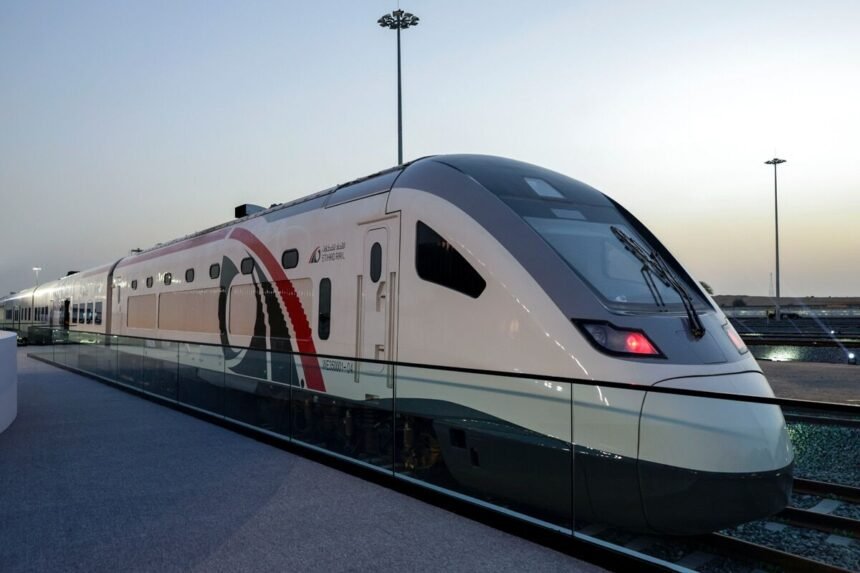
The much-anticipated Etihad Rail passenger network is set to transform mobility across the country, connecting major cities, desert towns, coastal communities, and business districts through one modern railway system. Spanning nearly 900 kilometres, the service represents one of the biggest transportation milestones in the UAE’s history.
More importantly, people now know where they will be hopping on and off.
Here is a closer look at the first 11 Etihad Rail stations UAE passengers can expect, and why each stop matters.
1. Mohammed Bin Zayed City, Abu Dhabi
Among all the stations, Mohammed Bin Zayed City could become one of the busiest.
Positioned close to the capital’s heart, this station offers direct access to Abu Dhabi’s residential and commercial areas. For thousands of daily commuters, it promises something priceless: less time behind the wheel and more time with family or work.
As one of the first stations to become operational, it will serve as a major gateway into the capital.
Why it stands out
- Central Abu Dhabi access
- Ideal for daily commuters
- Early operational station
2. Al Hilal, Fujairah
Located at the eastern edge of the network, Al Hilal represents much more than a station.
For years, travelling to Fujairah meant lengthy road journeys. Soon, visitors heading toward beaches, mountain landscapes, and coastal communities will enjoy a smoother alternative.
Modern facilities, waiting lounges, car rentals, taxis, cafés, and ticket machines make this station a complete travel hub.
Why it stands out
- Gateway to Fujairah city
- Tourist-friendly amenities
- One of the first completed stations
3. Jumeirah Golf Estates, Dubai
Dubai’s first Etihad Rail station arrives in one of the city’s fastest-growing districts.
Situated along Sheikh Mohammed Bin Zayed Road, Jumeirah Golf Estates is strategically positioned to connect with Dubai’s expanding metro network in the future.
This means Etihad Rail travelers could eventually switch seamlessly between metro lines and national rail services.
Why it stands out
- Dubai’s first passenger station
- Future integration with metro lines
- Convenient access to southern Dubai
4. Al Dhaid, Sharjah
Known for its agriculture and growing population, Al Dhaid is emerging as an important destination.
The station is expected to become a major option for residents travelling between Sharjah and Dubai, reducing reliance on congested roads.
For many families living outside city centres, that means better work-life balance and easier access to employment opportunities.
Why it stands out
- Strong commuter demand
- Strategic Sharjah location
- Faster connections to Dubai
5. University City, Sharjah
Students and travellers flying through Sharjah International Airport stand to benefit enormously.
University City is home to several leading educational institutions, making the station particularly valuable for thousands of students and academic staff.
It could also simplify airport access and reduce one of Sharjah’s biggest frustrations: traffic.
Why it stands out
- Perfect for students
- Airport accessibility
- Educational hub connection
6. Al Faya, Abu Dhabi
Al Faya occupies a strategic position between Abu Dhabi and Al Ain.
Already known for its logistics importance through the Al Faya Dry Port, the area is expected to become even more significant as rail connectivity boosts trade and movement.
The station highlights how Etihad Rail is designed not only for passengers but also for long-term economic growth.
Why it stands out
- Important logistics centre
- Links Abu Dhabi and Al Ain
- Supports economic development
7. Al Mirfa, Abu Dhabi
Life moves at a different pace in Al Mirfa.
The coastal town, famous for fishing traditions and quiet beaches, may soon attract more visitors thanks to easier access.
Weekend travellers searching for peaceful escapes could find Al Mirfa becoming one of the network’s hidden gems.
Why it stands out
- Beautiful coastal setting
- Tourism potential
- Relaxed atmosphere
8. Madinat Zayed, Abu Dhabi
Deep within the Al Dhafra region lies one of the UAE’s largest inland towns.
For residents here, rail connectivity represents more than convenience. It creates stronger ties to the rest of the country and opens new opportunities for business, tourism, and investment.
Why it stands out
- Key Al Dhafra destination
- Expands regional connectivity
- Encourages economic activity
9. Mezairaa, Abu Dhabi
Located near the famous Liwa Oasis, Mezairaa introduces travellers to a completely different side of the UAE.
Rolling dunes and desert landscapes have always attracted adventure seekers. The rail link will make these experiences easier to access, potentially turning the region into a larger tourism hotspot.
Why it stands out
- Access to Liwa Oasis
- Stunning desert scenery
- Ideal for adventure tourism
10. Al Dhannah, Abu Dhabi
Roughly 240 kilometres from Abu Dhabi city, Al Dhannah serves one of the emirate’s largest communities.
Its inclusion shows the ambition behind the railway project: ensuring growth reaches not just major cities but also regional centres.
Why it stands out
- Major western Abu Dhabi city
- Supports regional development
- Important community connection
11. Al Sila, Abu Dhabi
The westernmost stop on the map could eventually become one of the most strategically important.
As future GCC rail links become reality, Al Sila may evolve into an international gateway connecting neighbouring countries.
Today’s station could become tomorrow’s regional transportation hub.
Why it stands out
- Strategic border location
- Future GCC connectivity
- Long-term economic significance
How Etihad Rail Stations UAE Will Change Travel
The real story goes beyond station names.
The Etihad Rail passenger service is expected to dramatically shorten travel times. Journeys between Abu Dhabi and Dubai are projected to take around 50 minutes, while trips between Dubai and Fujairah will become equally efficient.
With Etihad Rail trains operating at speeds of up to 200 km/h and future high-speed services reaching 350 km/h, the railway promises to redefine how people experience the Emirates.
Instead of seeing the UAE as separate cities connected by highways, residents will begin viewing it as one seamlessly linked destination.
Final Takeaway
The first 11 Etihad Rail stations UAE travellers will soon use represent far more than transport infrastructure.
They symbolize a new chapter for the country, one where business, tourism, education, and everyday life become more connected than ever before.
From the deserts of Liwa to the coastlines of Fujairah and the urban centres of Dubai and Abu Dhabi, the railway is quietly laying the tracks for the next generation of travel.
And once the first Etihad Rail train departs, getting around the UAE may never feel the same again.
Do follow us on Instagram.
Read More –How World Cup 2026 Is Reshaping Daily Life for Millions of Saudi Fans