


How Artificial Intelligence Is Reshaping Gulf Career Opportunities?
The Gulf Cooperation Council region is experiencing one of the most significant workplace transformations in its modern history. From Riyadh and Dubai to Doha and Abu Dhabi, Artificial intelligence is no longer a futuristic concept discussed in boardrooms. It is becoming a daily reality that is changing how businesses operate, how employees work, and how new careers are being created.
- 1. Traditional Jobs Are Evolving Rather Than Disappearing
- 2. Demand for Artificial Intelligence Specialists Is Growing Rapidly
- 3. GCC Governments Are Accelerating Workforce Transformation
- 4. Digital Skills Have Become Essential Across Industries
- 5. New Career Paths Are Emerging
- 6. Healthcare Is Experiencing a Major Artificial Intelligence Revolution
- 7. Recruitment and Hiring Are Becoming Smarter
- 8. Continuous Learning Is Becoming a Career Requirement
- 9. Entrepreneurship Opportunities Are Expanding
- 10. The Future of AI in GCC Job Market Looks Increasingly Human
- Final Takeaway
For many professionals, Artificial Intelligence (AI) brings excitement and opportunity. For others, it raises questions about job security and the future of work. The truth lies somewhere in between.
The rise of Artificial Intelligence in GCC Job Market is not simply about replacing workers with machines. It is about redefining jobs, creating entirely new industries, and preparing the workforce for a more digital future.
Here are ten powerful ways AI is transforming the GCC job market and what it means for employers, employees, and future generations.
1. Traditional Jobs Are Evolving Rather Than Disappearing
A few years ago, many workers feared that Artificial Intelligence would eliminate large numbers of jobs.
Instead, something more interesting is happening.
Consider an accountant who once spent hours manually reviewing spreadsheets. Today, AI tools can automate repetitive calculations, allowing that same professional to focus on financial strategy and decision-making.
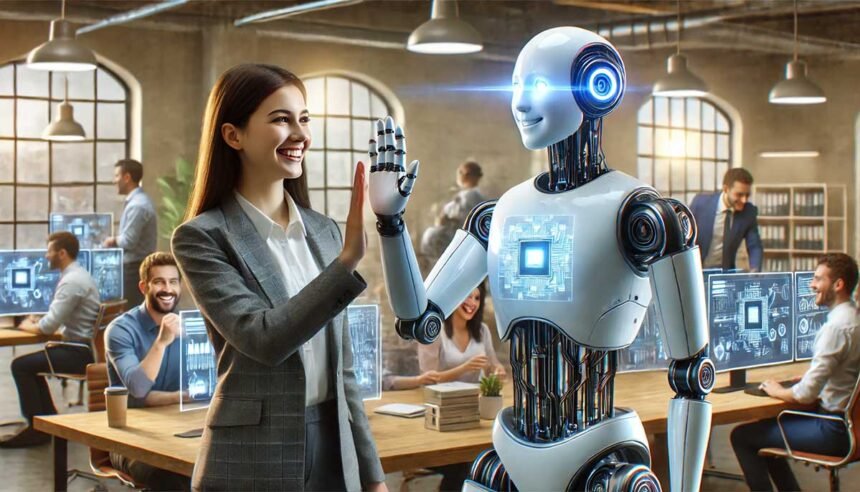
Across the GCC, many existing roles are evolving rather than vanishing. Employees are increasingly expected to work alongside AI systems, using technology to become more productive and valuable.
Why It Stands Out
The focus is shifting from replacement to enhancement, creating opportunities for workers willing to adapt.
2. Demand for Artificial Intelligence Specialists Is Growing Rapidly
As governments and businesses invest heavily in digital transformation, the need for AI experts has surged.
Companies are actively searching for:
- Artificial Intelligence engineers
- Machine learning specialists
- Data scientists
- AI consultants
- Robotics experts
A young graduate entering the workforce today may find career opportunities that barely existed a decade ago.
Why It Stands Out
AI-related positions often offer strong salaries, long-term growth potential, and international career mobility.
3. GCC Governments Are Accelerating Workforce Transformation
Across the Gulf, national development plans increasingly place artificial intelligence at the center of economic growth.
The vision is clear.
Rather than relying solely on traditional sectors, GCC economies are investing in technology-driven industries that can compete globally.
This strategy is creating demand for highly skilled professionals while encouraging businesses to embrace innovation.
Why It Stands Out
Government support often accelerates job creation and helps workers access new training opportunities.
4. Digital Skills Have Become Essential Across Industries
Not everyone needs to become an Artificial Intelligence (AI) engineer.
However, almost everyone will need some level of digital literacy.
A marketing professional now uses AI-powered analytics. A healthcare worker relies on intelligent diagnostic tools. A logistics manager works with predictive software to improve supply chains.
The most successful professionals are learning how to collaborate with technology rather than avoid it.
Why It Stands Out
Digital skills are becoming a universal career advantage regardless of industry.
5. New Career Paths Are Emerging
One of the most fascinating effects of Artificial Intelligence in GCC Job Market is the creation of entirely new professions.
Roles such as:
- AI ethics specialists
- Prompt engineers
- Automation consultants
- Digital transformation managers
- Human-AI collaboration experts
were virtually unknown just a few years ago.
Today, organizations are hiring professionals to manage the relationship between people and intelligent systems.
Why It Stands Out
The future workforce may include jobs that have not even been invented yet.
6. Healthcare Is Experiencing a Major Artificial Intelligence Revolution
Imagine a doctor receiving AI-generated insights that help detect diseases earlier and more accurately.
This is already becoming reality.
Hospitals and healthcare providers across the GCC are increasingly using AI to improve diagnostics, patient management, and operational efficiency.
Rather than replacing healthcare professionals, AI often acts as a powerful assistant that supports better outcomes.
Why It Stands Out
Healthcare workers who embrace technology can increase their impact while improving patient care.
7. Recruitment and Hiring Are Becoming Smarter
Finding the right candidate has always been challenging.
Today, Artificial Intelligence (AI) tools help employers analyze applications, identify qualified candidates, and streamline recruitment processes.
For job seekers, this means resumes must be optimized not only for human recruiters but also for AI-powered screening systems.
Why It Stands Out
Understanding how modern hiring technology works can significantly improve job search success.
8. Continuous Learning Is Becoming a Career Requirement
A decade ago, earning a degree often felt like the final educational milestone.
That mindset is changing rapidly.
Professionals now regularly update their skills through online courses, certifications, workshops, and industry training programs.
The workers who thrive in an AI-driven economy are those who embrace lifelong learning.
Why It Stands Out
Adaptability is becoming one of the most valuable skills in the modern workforce.
9. Entrepreneurship Opportunities Are Expanding
AI is not only helping employees.
It is empowering entrepreneurs.
A small business owner can now access tools that automate customer service, analyze market trends, create content, and improve operations without hiring large teams.
This levels the playing field and allows startups across the GCC to compete more effectively.
Why It Stands Out
Technology is lowering barriers to entry and creating opportunities for innovation.
10. The Future of AI in GCC Job Market Looks Increasingly Human
Perhaps the biggest misconception about AI is that the future belongs solely to machines.
In reality, human skills are becoming even more important.
Creativity, leadership, emotional intelligence, communication, and critical thinking remain difficult to automate.
A manager who inspires teams, a teacher who motivates students, or a healthcare professional who comforts patients provides value that technology alone cannot replicate.
As AI handles routine tasks, human capabilities become more visible and more valuable.
Why It Stands Out
The most successful professionals will combine technical knowledge with uniquely human strengths.
Final Takeaway
The story of AI in GCC Job Market is not a story of machines replacing people. It is a story of transformation.
Across industries, AI is changing job descriptions, creating new career paths, increasing productivity, and encouraging continuous learning. While some traditional tasks are becoming automated, entirely new opportunities are emerging for workers who are willing to adapt.
The professionals who succeed in the coming years will not necessarily be those with the most technical expertise. They will be those who embrace change, develop digital skills, and combine technology with creativity, problem-solving, and human insight.
The GCC’s workforce transformation is already underway. For workers, students, entrepreneurs, and business leaders alike, the future is not something to fear. It is something to prepare for, participate in, and help shape.
Do follow Gulf Prime on Instagram.
Read More –10 Best Brunches in Dubai That Are Worth Every Dirham