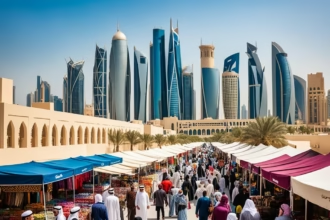



Qatar’s glittering skyline, luxury malls, and modern attractions often capture international attention. Yet beyond the skyscrapers of Doha lies another side of the country—one filled with centuries-old trading traditions, aromatic spice stalls, handcrafted souvenirs, bustling marketplaces, and authentic local experiences.
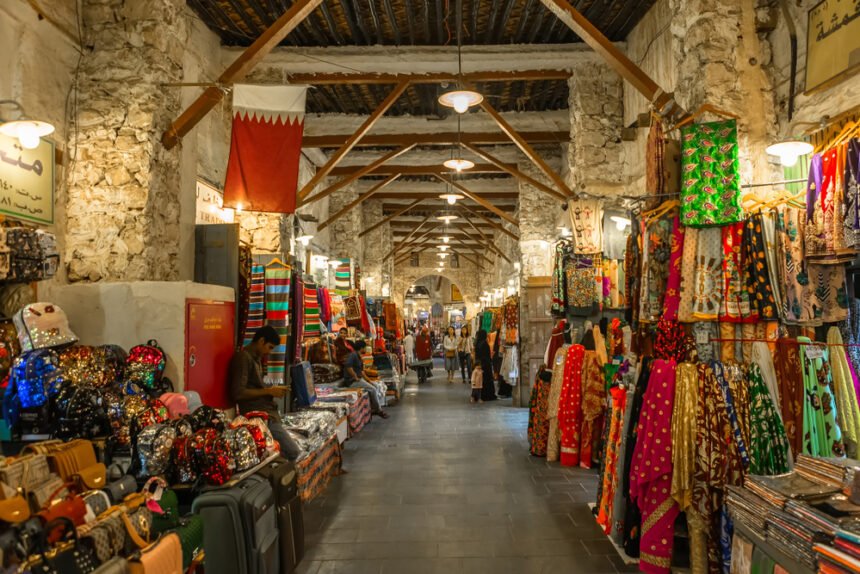
Traditional souqs remain among the best places to experience Qatari culture firsthand. These markets have long served as social, commercial, and cultural hubs where merchants, fishermen, pearl traders, and artisans gathered to exchange goods and stories. Today, they continue to offer visitors a glimpse into Qatar’s heritage while providing excellent opportunities for shopping, dining, photography, and cultural exploration.
Whether you’re searching for traditional perfumes, spices, gold jewelry, handicrafts, or authentic Arabic cuisine, these traditional souqs in Qatar deserve a place on every travel itinerary.
1. Souq Waqif, Doha

No visit to Qatar is complete without exploring the iconic Souq Waqif. Located in the heart of Doha, near the scenic Doha Corniche, this historic marketplace is the country’s most famous traditional souq.
Originally established as a trading market for Bedouins and local merchants, Souq Waqif has been carefully restored to preserve its traditional mud-brick architecture and authentic atmosphere. Walking through its narrow alleyways feels like stepping back in time.
Visitors can shop for:
- Traditional Arabic perfumes and oud
- Spices and herbs
- Falconry equipment
- Handmade textiles
- Jewelry and souvenirs
- Traditional Qatari clothing
The market is also home to the famous Falcon Souq, art galleries, cafés, and some of Doha’s best restaurants serving Qatari, Lebanese, Syrian, Turkish, and Moroccan cuisine.
Best time to visit: Evening hours, especially between October and April.
2. Falcon Souq, Doha
Located within Souq Waqif, the specialized Falcon Souq offers one of Qatar’s most unique cultural experiences.
Falconry remains deeply rooted in Qatari heritage, and this market is dedicated entirely to the care, trade, and appreciation of falcons. Visitors can observe trained falcons, browse traditional hunting equipment, and even visit the nearby Falcon Hospital.
Even if you have no interest in purchasing a bird, the experience provides fascinating insight into one of the Gulf region’s oldest traditions.
Interesting fact: Some falcons sold here can cost tens of thousands of dollars.
3. Gold Souq, Doha
Adjacent to Souq Waqif sits Doha’s renowned Gold Souq, a favorite destination for visitors seeking fine jewelry and traditional Gulf designs.
The market features dozens of shops selling:
- Gold necklaces
- Wedding jewelry
- Diamond pieces
- Precious stones
- Traditional Arabic designs
- Customized jewelry
Unlike many international shopping districts, the Gold Souq maintains a traditional marketplace atmosphere while offering certified precious metals and gemstones.
Travelers often visit to compare prices and discover unique handcrafted pieces unavailable in large shopping malls.
4. Omani Souq, Doha
The lesser-known Omani Souq offers a quieter and more traditional shopping experience.
Historically, merchants from Oman brought spices, incense, dates, perfumes, and handmade crafts to Qatar through maritime trade routes. Today, the market preserves this cultural exchange through its diverse collection of Arabian products.
Visitors can find:
- Frankincense
- Traditional perfumes
- Decorative handicrafts
- Arabian coffee accessories
- Regional spices
The souq provides an excellent opportunity to experience authentic Gulf culture away from larger tourist crowds.
5. Al Wakrah Old Souq

Located approximately 20 kilometers south of Doha, Al Wakrah Old Souq beautifully combines traditional architecture with a stunning seaside setting.
Once a thriving fishing and pearl-diving town, Al Wakrah has transformed its historic waterfront into one of Qatar’s most picturesque cultural attractions.
Highlights include:
- Traditional Qatari architecture
- Waterfront cafés
- Seafood restaurants
- Souvenir shops
- Family-friendly promenades
- Cultural exhibitions
The nearby beach and marina make this an ideal destination for a half-day excursion outside Doha.
Local tip: Sunset is the perfect time to visit, when the harbor views become especially beautiful.
6. Souq Al Wakra Fish Market
Adjacent to Al Wakrah’s heritage district lies the bustling Al Wakrah Fish Market.
Fishing has played a vital role in Qatar’s history, and this market continues that tradition today. Visitors can observe fishermen unloading fresh catches and experience the daily rhythms of coastal life.
Popular seafood varieties include:
- Hamour
- Kingfish
- Shrimp
- Crab
- Local shellfish
Several nearby restaurants will prepare freshly purchased seafood according to your preferences, offering one of Qatar’s most authentic culinary experiences.
7. Souq Al Khor
Situated north of Doha in the coastal city of Al Khor, Al Khor Traditional Market offers a glimpse into everyday life beyond the capital.
Less commercialized than Doha’s markets, this traditional souq remains popular among local residents. Visitors can explore:
- Fresh produce stalls
- Traditional clothing shops
- Household goods
- Local spices
- Regional delicacies
The market’s authentic atmosphere makes it particularly appealing for travelers seeking experiences beyond mainstream tourist attractions.
Nearby attractions include Al Khor Corniche and the famous mangrove forests of northern Qatar.
8. Friday Market (Souq Al Jumaa), Doha
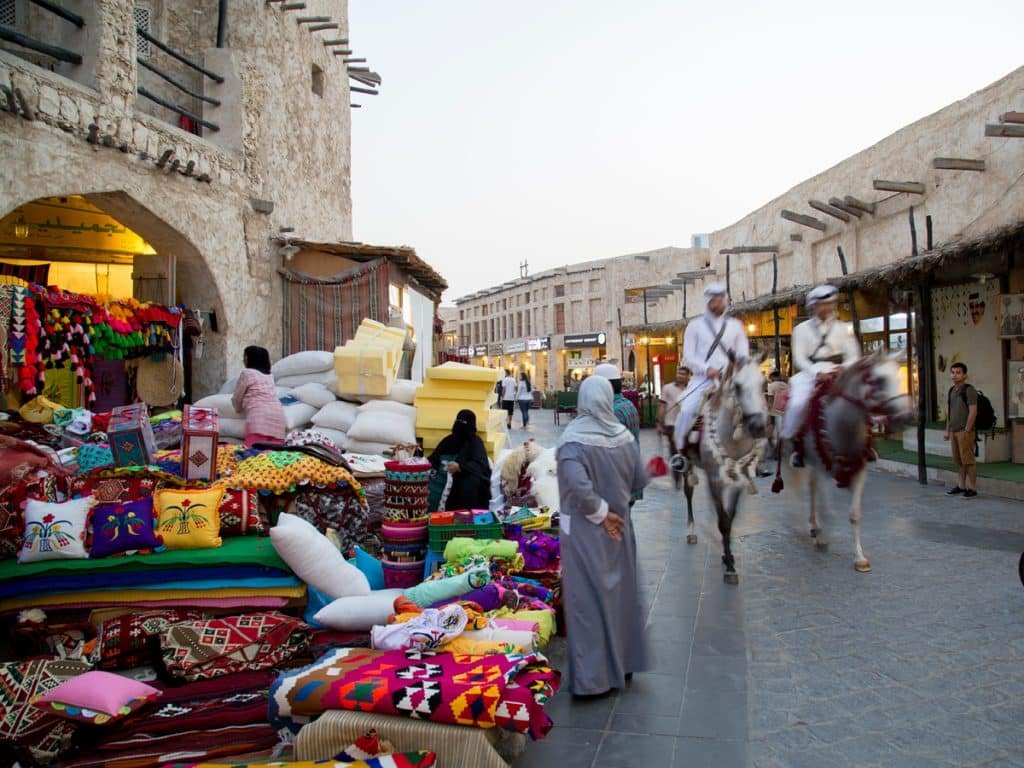
The vibrant Friday Market has long been a favorite among bargain hunters and expatriate communities.
Unlike Qatar’s heritage-focused souqs, this market offers a diverse blend of traditional and contemporary shopping experiences. Visitors can browse:
- Carpets and rugs
- Furniture
- Household goods
- Plants
- Textiles
- Imported handicrafts
The market’s eclectic atmosphere reflects Qatar’s multicultural population and provides excellent opportunities for discovering unexpected treasures.
9. Souq Al Haraj
For antique enthusiasts, Souq Al Haraj offers one of Qatar’s most fascinating shopping experiences.
This traditional flea market specializes in:
- Vintage furniture
- Antiques
- Old electronics
- Collectibles
- Traditional artifacts
- Rare decorative items
Exploring the market often feels like a treasure hunt, with hidden gems waiting to be discovered among countless stalls.
Photography enthusiasts and collectors particularly enjoy the market’s nostalgic atmosphere.
10. Traditional Spice Markets of Souq Waqif
Although technically part of Souq Waqif, the dedicated spice section deserves recognition of its own.
The spice market immerses visitors in the aromas, colors, and flavors of the Middle East. Vendors sell:
- Saffron
- Cardamom
- Sumac
- Dried lemons
- Rose petals
- Arabic coffee blends
- Traditional herbal remedies
Many merchants have operated family businesses for generations and are happy to explain the history and uses of their products.
For food lovers and culinary travelers, this remains one of the most memorable experiences in Qatar.
Conclusion
Traditional souqs remain among Qatar’s most rewarding attractions, offering far more than shopping opportunities. They provide a window into the country’s history, culture, cuisine, and everyday life. From the bustling alleys of Souq Waqif to the peaceful waterfront charm of Al Wakrah Old Souq, these markets allow visitors to experience the authentic spirit of Qatar while creating unforgettable travel memories.
Do follow us on Instagram.
Read More – 10 Iconic Street Foods That Make Qatar a Food Lover’s Paradise